
How Ransomware Groups Pick Their Targets (and How to Not Be One)
Ransomware groups aren’t randomly spraying attacks — they profile targets. Understanding how they choose makes it much easier to understand how to fall off that list. This is a defensive, awareness-focused breakdown — no exploitation techniques, just the patterns that matter for hardening your own setup.
Ransomware attacks aren’t random — they’re profiled.
Understanding the signals attackers actually look for is the fastest way to understand what makes your own setup look vulnerable, or not.
There’s a comforting but inaccurate mental model that ransomware attacks are essentially random lightning strikes — bad luck, nothing you could have predicted or prevented. In reality, a meaningful and growing share of ransomware activity involves some degree of target profiling before an attack is actually launched. Understanding what that profiling looks for is genuinely useful defensive information, not just interesting trivia.
This article stays deliberately at the level of patterns and defensive posture — not specific exploitation techniques or scanning methods, which wouldn’t help defenders and could help the wrong audience. The goal is understanding what makes an organization look attractive to attackers, so you can address exactly those signals.
The signals that actually matter
Based on publicly reported patterns in ransomware behavior, here are the signals that consistently correlate with increased targeting likelihood.
- Unpatched, internet-facing software:This remains the single biggest signal by a wide margin. Automated scanning tools can identify outdated software versions across the internet quickly and cheaply, making unpatched systems an efficient, low-effort target for attackers to find.
- Publicly discoverable misconfigurations:Exposed admin panels, storage buckets set to public instead of private, or default credentials left unchanged are all things that show up in routine, automated internet-wide scans — not the result of an attacker specifically targeting you.
- Industry-specific targeting waves:Certain industries see targeting waves at different times, often correlated with perceived likelihood of paying (healthcare, legal, and finance are commonly cited examples) or with known common software stacks in that sector.
- Backup infrastructure specifically:A growing pattern in recent ransomware behavior is to specifically locate and disable or encrypt local backup caches BEFORE encrypting general files — removing the easy recovery option first, which makes ransom payment more likely.
The Backup-First Targeting Trend Deserves Special Attention
The pattern of disabling or encrypting backup infrastructure before attacking primary files is specifically designed to eliminate your recovery options and increase pressure to pay the ransom.
This is exactly why offsite, immutable backups—physically or logically isolated from systems an attacker can access—have become one of the most important defensive investments any organization can make.
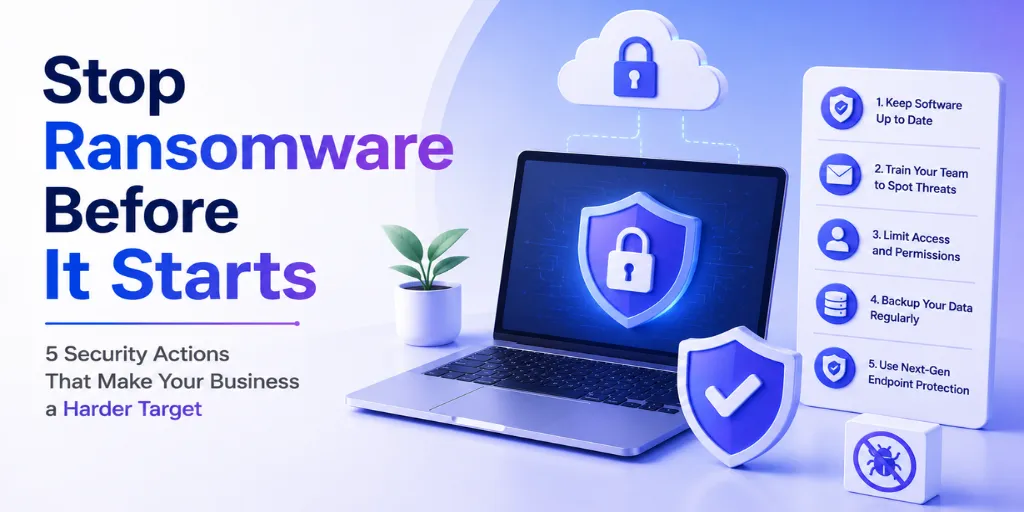
How to make yourself a harder target this week
None of the actions below require a large security budget or a dedicated security team — they’re prioritized by impact relative to effort.
Start with the Highest-Impact Item
If your team can implement only one improvement this week, make it an
offsite, immutable backup strategy.
It directly neutralizes the increasingly common “disable backups first” ransomware technique, giving your organization a reliable recovery path even if attackers gain administrative access.
Quick self-assessment
Are you showing any of these signals right now?
- Signal 1:Do you have a routine, predictable patch schedule for internet-facing systems?
- Signal 2:When did you last audit externally-facing systems for misconfigurations?
- Signal 3:Is at least one backup copy genuinely offsite and immutable — not reachable from your primary network?
- Signal 4:Is MFA enforced specifically on admin and backup-system accounts?
Frequently asked questions
Find answers to the most common questions about ransomware protection and backup security.
Is ransomware targeting really this calculated, or is a lot of it still random?
If we’ve never been targeted before, does that mean we’re not at risk?
Does having backups alone protect us from ransomware?
What’s the single highest-impact change we can make this week?
None of this requires becoming a security expert overnight — it requires understanding that attackers are, in a meaningful number of cases, making a deliberate choice based on visible signals, and addressing those specific signals directly. The organizations that do this consistently are simply less attractive targets, which in practice is most of what defense actually accomplishes.