
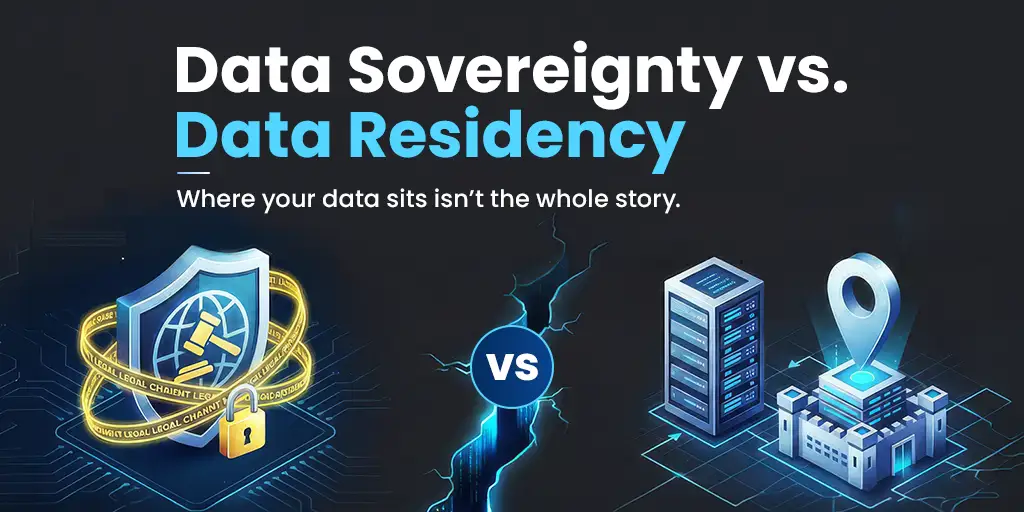
Concerns for data sovereignty extend beyond the EU. Take a look at the difference between data sovereignty and data residency, a real life example where data sovereignty surprised a US company, and a practical due diligence framework.
Because of GDPR, many businesses focus all of their data protection efforts on Europe, causing many to assume if they don’t have any clients in the EU, they don’t need to worry about data protection laws outside the EU. In the process, they miss data protection laws in many other areas. Several jurisdictions have their own laws determining the places where data can be legally hosted and the people who can compel access to it.
“This article provides general information and is not legal advice. Data sovereignty requirements vary by jurisdiction and change over time — consult legal counsel familiar with your specific situation for guidance you can rely on.”
What data sovereignty means, distinct from residency
What matters for data residency is where the data is physically stored. Data sovereignty is more encompassing and includes: which country’s laws apply to the data, who has the legal power to control the data, and where the data is located. Data can be resident-compliant and still raise sovereignty concerns. For instance, data may be residency-compliant if it is physically stored in the correct country, while sovereignty issues can still arise if the data is stored with a hosting company that is in a different country and under different legal jurisdiction.
Where data sovereignty considerations apply
The table below shows where data sovereignty requirements typically apply.
Why this matters even for non-EU-facing businesses
If your operations cross borders, you will face sovereignty challenges regardless of where your company is based or where your primary market is. It is worth doing the exercise in mapping out where the challenges are rather than presuming it doesn’t affect you. If your company’s data, customers, or operations span many countries, the exercise is worth doing.
How to evaluate a vendor’s sovereignty posture
ASK YOUR VENDORS: what is the physical location of data (including backup and disaster recovery copies) and in which legal jurisdiction is the data storage entity located? A vendor who can answer both questions specifically and with confidence is giving you information that you can do something with.
A simple due-diligence framework
- Map which countries your customers’ data relates to: Not just where your company is based — where your customers, and by extension their data, are actually located or hold citizenship.
- Ask vendors specifically where data — including backups — physically resides: A vendor’s answer about primary data storage doesn’t necessarily apply to backup or disaster-recovery copies, which are easy to overlook in this conversation.
- Confirm whether any applicable jurisdiction has requirements you’re not currently meeting: This may require consulting counsel familiar with the specific jurisdictions relevant to your business, rather than relying on general guidance alone.
- Document the assessment, even briefly: A simple record of what you checked and when becomes valuable if a customer, partner, or regulator later asks how you approached this.
This is a mapping exercise, not a one-time checkbox
Renewal of this mapping is essential as your business continues to grow. New markets mean new rules and laws, as well as new clients and vendors. Whenever your business undergoes changes and expansion, reevaluate the circumstances for sovereignty.
Frequently asked questions
Q: Is data sovereignty the same thing as data residency?
They’re related but distinct. Data residency refers to where data is physically stored. Data sovereignty is broader — it also concerns which country’s laws govern that data and who can compel access to it, regardless of where it’s physically located.
Q: Do I need to worry about this if my business only operates in one country?
Possibly less than a multinational business, but not necessarily zero — if any vendor you use stores or processes data internationally, sovereignty considerations can apply even to a single-country business.
Q: How do I find out which specific laws apply to my situation?
This genuinely depends on your specific circumstances — where your customers are, what data you hold, and your industry. Consulting a lawyer familiar with data protection in your relevant jurisdictions is the reliable path, rather than relying on general articles like this one for specific compliance decisions.
Q: What’s the most practical first step if I’ve never thought about this before?
Start by mapping which countries your customer data actually relates to, and asking your key vendors directly where that data — including backups — physically resides. That single conversation often reveals whether deeper investigation is needed.
Conclusion
While GDPR tends to monopolize the conversation regarding data protection, the overall concern, which country’s laws govern your data, is much broader. Addressing this concern requires a deliberate mapping exercise which is reasonable and practical. It can be undertaken periodically to reflect changes in data flows.
Dev Gupta
VP Security & Compliance at Softyz Inc. Dev is CISSP certified and an ISO 27001 Lead Auditor, and has worked with customers navigating data sovereignty considerations across multiple jurisdictions.